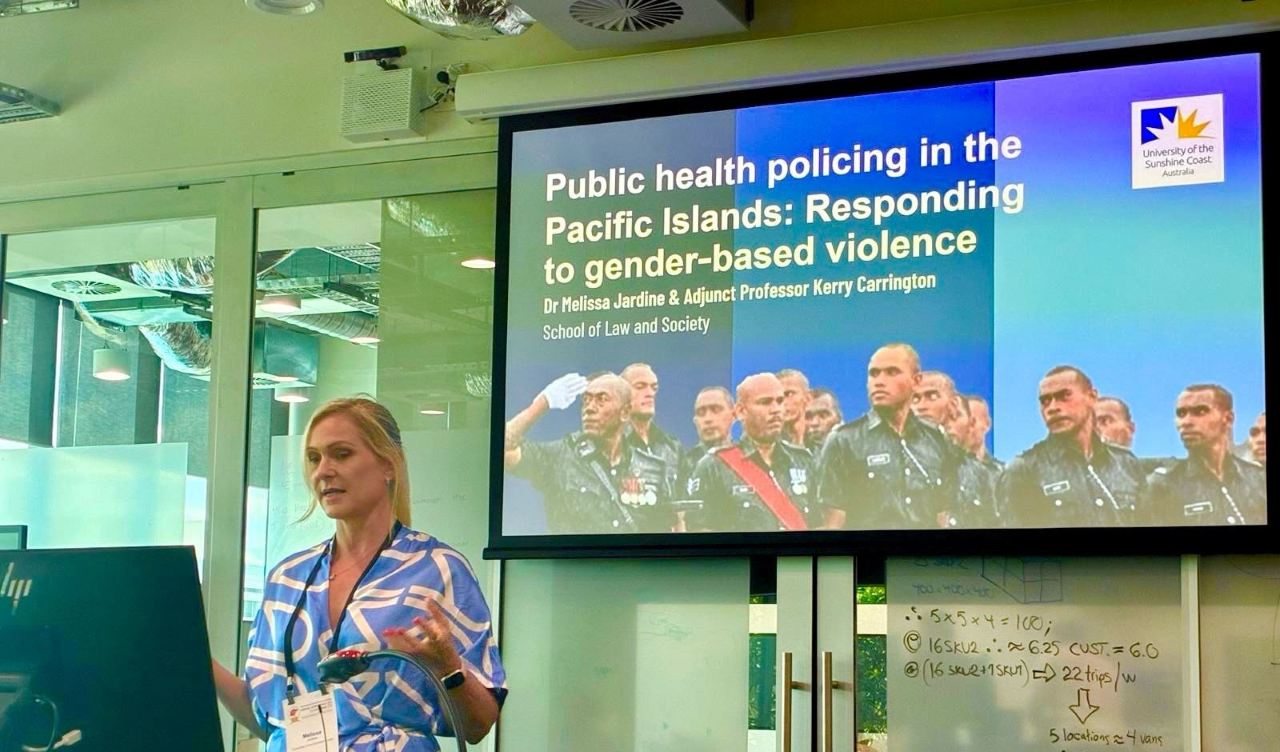
public-health-policing-in-pacific-island-nations-glepha-web

Public Health Policing in Fiji 2026 program is supported by the Australian Government and implemented by the Global Law Enforcement and Public Health Association (GLEPHA).

Australian Aid logo
glepha-logo

Program Overview

Australia’s Department of Foreign Affairs and Trade (DFAT) is supporting Fiji’s national response to the emerging HIV epidemic. Through this partnership, the Kirby Institute has contracted the Global Law Enforcement and Public Health Association (GLEPHA) to deliver a 12‑month program in 2026 focused on strengthening public health‑aligned policing and justice practices.

TARGET AUDIENCE

The program supports police, prosecutors, legal officials, health partners, and community leaders to respond confidently and effectively to Fiji’s evolving HIV environment.

Why Has This Program Been Established

In 2025, the Fiji Police Force and legal sector leaders made a request via the Ministry of Health and Medical Services for support in regard to their roles in the rapidly shifting HIV situation driven by methamphetamine injecting and sexual transmission. Responses by the justice system directly influence:

  • the speed and scale of HIV transmission
  • officer safety and wellbeing
  • whether people seek help
  • whether harm reduction approaches succeed
  • community trust in police

Legal and policy reforms are underway, but daily policing and law enforcement decisions already shape outcomes. This program engages police and justice actors now, while long‑term reforms continue.


Program Purpose

To support Fiji’s law enforcement and justice sectors to adopt public health‑aligned policing and legal practices that protect LE officials safety and wellbeing, reduce HIV transmission, strengthen community safety, and enhance institutional effectiveness.

Objectives

  • Establish Fiji as a regional leader in public health policing
  • Strengthen knowledge on occupational safety and wellbeing, evidence-based and ethical decision-making, HIV and infectious diseases, and harm reduction approaches
  • Support law enforcement and partner agencies to strengthen understanding of needle and syringe programs (NSPs) and other harm reduction approaches
  • Improve coordination between policing, legal, health, and community sectors
  • Build sustainable local capability
  • Inform long‑term legislative, policy, and institutional reform

Program Timeline & Approach

Phase 1 — Understanding Context & Co‑Design (Feb–Mar 2026)

  • Meetings with police, prosecutors, legal officials, government agencies, health authorities, and community leaders
  • Field visits to Suva, Lautoka, Labasa, and other key locations
  • Talanoa and listening sessions
  • Co‑designing a program grounded in Fiji’s operational and cultural realities

Phase 2 — Program Delivery (Apr–Dec 2026)

  • Training and engagement with police, prosecutors, government agencies, health authorities and community leaders
  • Study tour to Australia to meet with police and others, and explore its harm reduction programs
  • Legal, policy and police operational guidance
  • Communications and media support
  • Monitoring, evaluation, and learning (MEL)

Meet the Team